
Electric Car Charging Time Calculator: How to Estimate Any EV's Charge Time in 2026
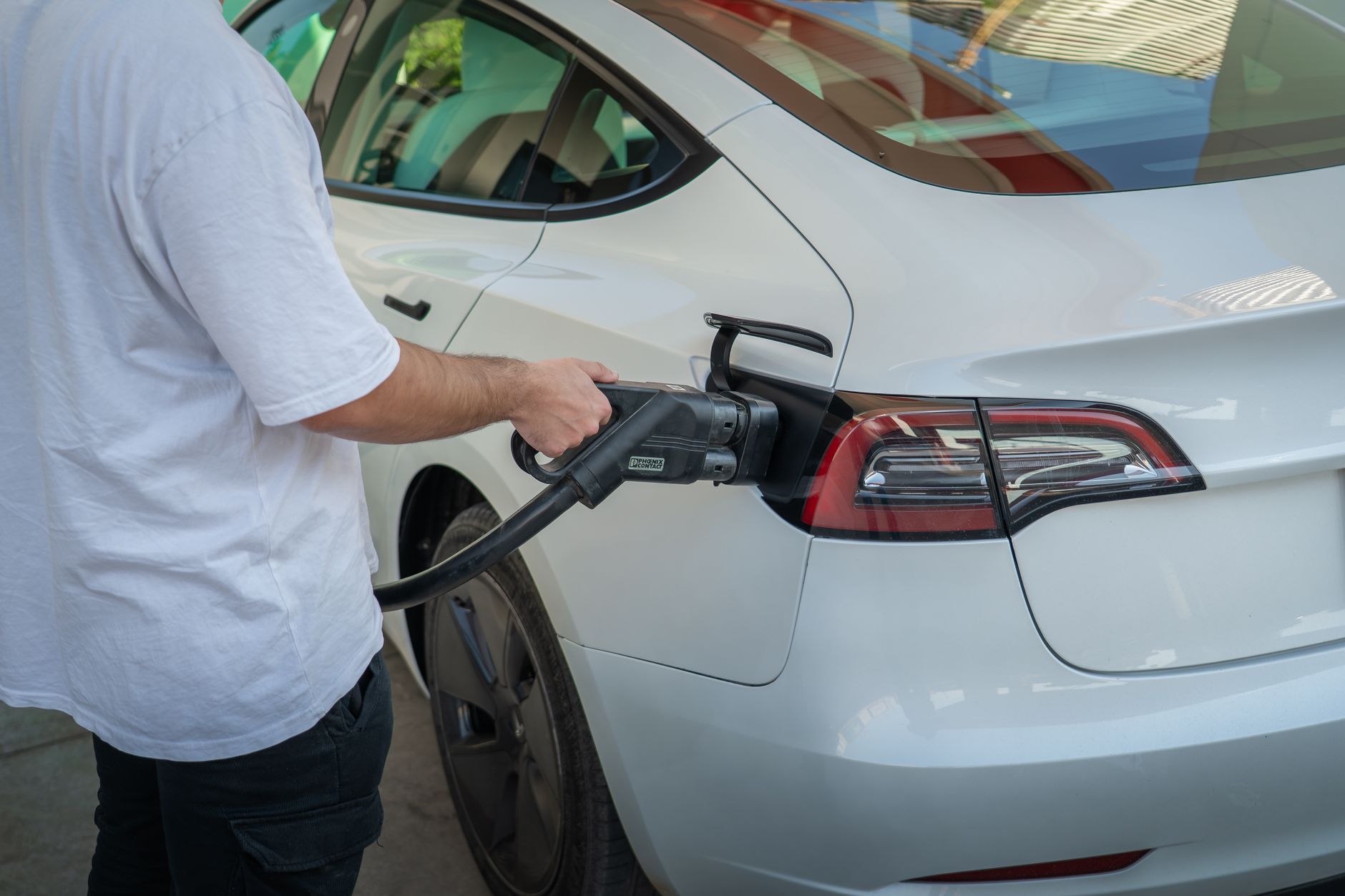
As fall road trip season kicks off and the 2026 model year EVs start hitting dealer lots, one question keeps popping up in forums and comment sections: “Okay, but how long will this thing actually take to charge?” It’s the right question — and the answer is more complicated than the sticker on the window suggests. That’s exactly why having a reliable electric car charging time calculator (even a mental one) is one of the most useful skills any EV owner or shopper can develop.
Here’s the good news: you don’t need an engineering degree or a fancy app to figure this out. With one simple formula and a few real-world adjustments, you can estimate charging time for virtually any EV, on any charger, in under 30 seconds. Let’s break it down.
The Core Electric Car Charging Time Calculator Formula
Every charging time estimate starts with the same basic math:
Charging Time (hours) = Energy Needed (kWh) ÷ Charging Power (kW)
That’s it. The trick is getting the right numbers for each variable.
Step 1: Figure out energy needed. This is your battery’s usable capacity multiplied by how much you need to add. Say you’re driving a 2026 Hyundai Ioniq 5 with a 77.4 kWh battery, you’re at 20%, and you want to reach 80%:
- Energy needed = 77.4 kWh × 60% = 46.4 kWh
Step 2: Know your actual charging power. This is where people go wrong. A “150 kW” DC fast charger rarely delivers 150 kW for the whole session, and your car’s onboard charger caps Level 2 speeds regardless of what the station can provide. More on that below.
Step 3: Divide. If that Ioniq 5 averages 100 kW over a 20–80% fast-charging session:
- 46.4 kWh ÷ 100 kW = 0.46 hours, or roughly 28 minutes
That tracks closely with Hyundai’s official 18-minute 10–80% claim on a 350 kW charger — once you account for the fact that most public fast chargers in the U.S. are still 150 kW units, not 350 kW.
Why the Simple Formula Lies (and How to Fix It)
If you only use the basic formula, your estimates will be optimistic — sometimes wildly so. Three real-world factors bend the curve:
1. The charging curve. EVs don’t charge at peak speed from empty to full. They ramp up, hold a peak (usually between 10–40% state of charge), then taper hard as the battery fills. A 2026 Kia EV6 might pull 230 kW at 15% but drop to 40 kW by 75%. This is why every manufacturer quotes “10–80%” times — the last 20% can take as long as the first 70%.
2. Temperature. Cold batteries charge slowly. In January, a non-preconditioned EV can take 50–100% longer on a DC fast charger. If your car has battery preconditioning (most 2026 models do when you navigate to a charger), use it. It’s the single biggest winter charging hack.
3. Charger reality vs. charger labels. Shared power cabinets, aging hardware, and grid limitations mean a “150 kW” station might deliver 90 kW on a busy Saturday. Always pad your road trip estimates by 15–20%.
A practical adjustment: for DC fast charging, use your car’s average charging rate (usually 60–70% of its peak) rather than the headline number.
Level 1, Level 2, and DC Fast Charging: Real 2026 Numbers
Let’s run the calculator across all three charging levels using a popular 2026 example: a Tesla Model 3 Long Range with roughly a 75 kWh usable battery, charging from 20% to 80% (about 45 kWh needed).
Level 1 (standard 120V outlet, ~1.3 kW):
- 45 kWh ÷ 1.3 kW = ~35 hours
- Verdict: Emergency backup only. Fine for plug-in hybrids, painful for full EVs.
Level 2 (240V home charger, ~11 kW):
- 45 kWh ÷ 11 kW = ~4.1 hours
- Verdict: The sweet spot for overnight charging. Even a big 100+ kWh truck battery refills while you sleep.
DC Fast Charging (averaging ~120 kW):
- 45 kWh ÷ 120 kW = ~23 minutes
- Verdict: Road trip fuel. Just don’t charge past 80% unless you truly need to — the taper makes it a time-waster.
One often-missed detail: your car’s onboard charger limits Level 2 speed. Many 2026 EVs accept 11 kW AC, but some (like certain base trims) cap at 7.2 kW. Check your specific trim before assuming a 48-amp home charger will deliver full speed.
A Quick-Reference Charging Time Cheat Sheet
Don’t want to do math in a parking lot? Memorize these rules of thumb for a typical modern EV with a 75–80 kWh battery:
- Level 1: Adds roughly 3–5 miles of range per hour
- Level 2 (7–11 kW): Adds roughly 20–35 miles of range per hour
- DC fast (10–80%): 18–40 minutes depending on the car’s charging curve
The standouts for 2026: vehicles on 800-volt architectures (Ioniq 5, EV6, Porsche Macan Electric, and the new wave of GM Ultium models with faster curves) consistently hit sub-25-minute 10–80% times. Meanwhile, some affordable 400-volt models — including several compact crossovers under $40,000 — still need 35–45 minutes. If road trips matter to you, charging curve specs deserve as much attention as range.
Building Your Own Charging Time Calculator Habit
The best EV owners I know run a quick mental calculation before every charging stop. Here’s the five-second version:
- Check your battery percentage and decide your target (usually 70–80% on road trips)
- Estimate kWh needed — for most EVs, 10% of battery ≈ 7–8 kWh
- Divide by realistic charger speed — knock 20% off the station’s rating
- Add a 5-minute buffer for plugging in, payment, and ramp-up
Apps like A Better Routeplanner, PlugShare, and your car’s built-in navigation now do this automatically, and honestly, they’re excellent. But understanding the underlying math means you’ll never be confused when reality doesn’t match the prediction — and you’ll shop smarter, too. When comparing two 2026 EVs, ask for the 10–80% time and average charging power, not just peak kW. That single number tells you more about real-world usability than almost anything else on the spec sheet.
The Bottom Line
An electric car charging time calculator isn’t a gadget — it’s a mindset. Once you internalize the simple formula (energy needed ÷ charging power) and adjust for the charging curve, temperature, and real-world charger behavior, range anxiety basically evaporates. You’ll know, before you ever pull into a station, whether you’re looking at a 20-minute coffee stop or a 45-minute lunch break.
As charging networks expand and 2026 models push average charging speeds higher, the gap between EVs and gas cars on road trips keeps shrinking. Do the math once for your specific vehicle, jot the numbers in your notes app, and you’ll charge with confidence every single time.