
Best Electric Car for Commuting 50 Miles Daily: The 2026 Real-World Efficiency Guide
With summer 2026 driving season in full swing and workplace EV charging installations hitting record numbers—up 34% year-over-year according to the latest DOE data—more Americans are finally asking the practical question: which EV actually makes sense for a grinding daily commute? Not the road trip warrior. Not the status symbol. The humble, reliable workhorse that’ll swallow 50 miles of asphalt every single day without drama, without excessive charging costs, and without the range anxiety that still keeps potential buyers awake at night.
If you’re covering 50 miles daily—roughly 12,500 miles annually just for work—you’re in a sweet spot that most 2026 EVs handle easily. But “can handle it” and “is the best tool for the job” are very different things. The best electric car for commuting 50 miles daily needs to nail efficiency, comfort, charging flexibility, and long-term battery health. Let’s cut through the marketing fluff and find your actual match.
Why 50 Miles Daily Changes Your EV Math
Most EV buying guides focus on weekend road trips or worst-case winter scenarios. Your commute is different. It’s predictable, repetitive, and brutal on efficiency in ways that don’t show up in EPA ratings.
Here’s the reality: 50 miles of daily commuting typically means 25 miles each way, often mixing highway speeds with stop-and-go traffic. At 70 mph on the highway, aerodynamic drag becomes your enemy. In traffic, regenerative braking becomes your friend. The ideal commuter EV balances both.
The charging math matters more than total range. With 50 miles daily, you don’t need 300+ miles of range—you need convenient, affordable replenishment. Consider:
- Level 1 (120V home outlet): Adds roughly 4-5 miles per hour. For 50 miles, you’d need 10-12 hours of plugging in—doable if you park at 7 PM and leave at 7 AM, but tight.
- Level 2 (240V home/work): Adds 25-40 miles per hour. Fully replenishes overnight in 1.5-2 hours.
- DC fast charging: Overkill for daily use, expensive, and hard on battery long-term.
Our recommendation: Budget for a $500-800 Level 2 home charger installation, or prioritize employers with workplace charging. Many 2026 commuters are finding free workplace Level 2 charging the secret weapon that makes EV ownership cheaper than gas.
The Efficiency Champions: Miles Per kWh, Not Just Range
For 50-mile daily duty, efficiency trumps battery size. A smaller, lighter battery that’s more efficient costs less to charge, replaces cheaper, and degrades slower. Here are the 2026 standouts by real-world efficiency:
Hyundai Ioniq 6: Still the efficiency king for 2026, averaging 4.2-4.5 miles per kWh in mixed commuting. That 50-mile commute consumes roughly 11-12 kWh—about $1.65-$1.80 at average US electricity rates. The slippery, polarizing design works.
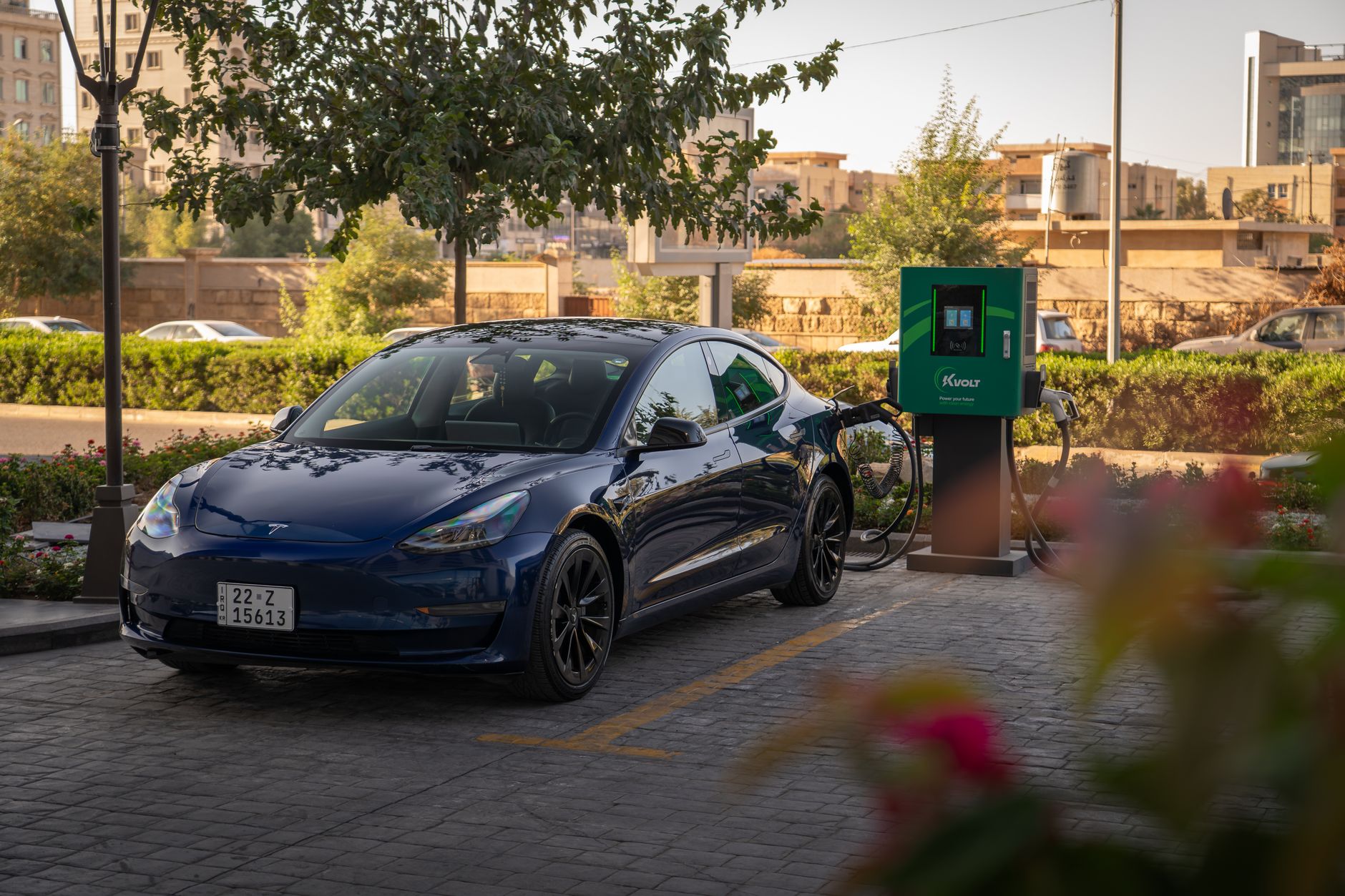
Tesla Model 3 Long Range: The Highland refresh maintains 4.0-4.3 miles per kWh with superior charging infrastructure access. Supercharger network reliability matters when you’re time-constrained on commute days.
BMW i4 eDrive40: Slightly less efficient at 3.8-4.1 miles per kWh, but the driving dynamics and seat comfort make it worth the small premium for those with highway-heavy commutes.
Chevrolet Equinox EV (FWD): The surprise 2026 entry. GM’s Ultium platform finally delivers real efficiency: 3.9-4.2 miles per kWh in a practical crossover package with actual ground clearance.
Avoid: Heavy, dual-motor performance variants for pure commuting. The AWD penalty typically costs 15-20% efficiency. Unless you need winter traction, save the money and the electrons.
Battery Longevity: The Hidden Commuter Cost
Here’s what dealerships won’t emphasize: daily deep cycling accelerates battery degradation. A 50-mile commute in a 250-mile range EV means you’re using 20-25% of capacity daily. In a 350-mile range EV, it’s only 14-17%. Counterintuitively, the bigger battery often lasts longer because it experiences less stress per cycle.
The 2026 sweet spot: 250-300 miles of EPA range. Below 250, winter commuting gets stressful. Above 300, you’re paying for capacity you don’t need and carrying unnecessary weight.
Tesla’s 2026 battery warranty covers 8 years/120,000 miles with 70% capacity retention. Hyundai and Kia match this. For 12,500 annual commute miles plus normal use, you’re looking at 15,000+ miles yearly—well within warranty but worth monitoring with apps like TeslaFi or A Better Route Planner for long-term health tracking.
Practical tip: Set your daily charge limit to 80% if your EV allows it. For a 270-mile range vehicle, that’s 216 miles available—more than 4x your daily need. This dramatically reduces battery stress compared to charging to 100% nightly.
Comfort and Tech: Surviving the Daily Grind
Fifty miles is roughly 45-75 minutes each way depending on traffic. Features that seem luxurious become essential:
Adaptive cruise with stop-and-go: Non-negotiable for 2026. Hyundai’s Highway Driving Assist 2, Tesla’s Autopilot, and BMW’s Driving Assistant Professional all handle bumper-to-bumper commuting competently. After three months of daily use, you’ll never buy another car without it.
Seat comfort: The Volkswagen ID.7’s ergoActive seats with massage and 14-way adjustment are the 2026 benchmark for commute comfort. The Tesla Model 3’s refreshed seats are improved but still firmer—fine for some, punishing for others. Test sit for 30+ minutes before buying.
Cabin noise: EVs expose tire and wind noise that gas engines mask. The Ioniq 6 and BMW i4 excel here; the Equinox EV and base Model 3 let more road noise through. For daily sanity, prioritize quiet.
Phone integration: Wireless Apple CarPlay and Android Auto are finally standard across most 2026 models. Tesla still resists—its native system is excellent, but if you’re deeply embedded in Apple or Google ecosystems, this friction matters daily.
The Workplace Charging Advantage: Free Miles
If your employer offers charging, your entire calculation shifts. Free workplace Level 2 charging effectively eliminates your “fuel” cost entirely. Even paid workplace charging—typically $0.15-0.25 per kWh—beats gas equivalents.
2026 workplace charging landscape: Federal tax credits for commercial EV charging installations (30% up to $100,000 per location) have driven massive expansion. Major employers including Amazon, Microsoft, and Target have announced 2026 expansions. Check PlugShare’s workplace filter before car shopping—knowing your charging infrastructure should inform your vehicle choice.
Strategy: If you have reliable workplace charging, prioritize efficiency and comfort over maximum range. A 220-mile Chevrolet Bolt EUV replacement or base Nissan Leaf Plus could serve perfectly, though the 2026 market is shifting toward the 250-mile minimum. If workplace charging is unreliable or unavailable, the 270-300 mile range becomes your safety blanket for unexpected errands or weekend use without weekend charging stress.
Making Your Decision: The Commuter Scorecard
Rank your priorities, then match:
| Priority | Top Pick | Runner-Up |
|---|---|---|
| Maximum efficiency | Hyundai Ioniq 6 | Tesla Model 3 |
| Comfort | BMW i4 eDrive40 | Volkswagen ID.7 |
| Value | Chevrolet Equinox EV | Hyundai Ioniq 5 (slightly less efficient) |
| Charging convenience | Tesla Model 3 | Any with workplace charging |
| Winter reliability | Subaru Solterra (AWD penalty accepted) | Tesla Model 3 with winter tires |
The best electric car for commuting 50 miles daily ultimately depends on your specific route, charging access, and personal ergonomics. But the 2026 market delivers genuine options across price points—no longer a compromise, but a clear upgrade from combustion for this use case.
The Bottom Line: Your Commute, Your EV
After three years of EV ownership and 40,000 commute miles, my advice is simple: overbuy on efficiency, underbuy on range, and never underestimate seat comfort. The 50-mile daily commute is the ideal EV application—predictable, cost-effective, and increasingly supported by infrastructure.
Test drive your top three candidates during actual commute hours, not Saturday showroom visits. Sit in traffic. Feel the seats. Test the adaptive cruise. Then run the numbers: at $0.15/kWh and 4.0 miles per kWh, your 50-mile commute costs under $2.00. The average gas equivalent at 30 MPG and $3.50/gallon? $5.83. Over 250 commute days annually, that’s $950+ in fuel savings alone, before maintenance, before tax incentives, before the quiet satisfaction of never visiting a gas station again.
The 2026 EV market finally delivers commuter-focused choices without forcing you into road-trip compromises. Find your match, charge smart, and reclaim your daily drive.